In 2026, organizations are not short on ambition. They are short on activation.
Strategies are sound. Investments are significant. Intent is clear. And yet, outcomes stall. Adoption lags. Momentum fades. Not because people resist change, but because the human system supporting that change is overextended.
In managed care organizations and health systems, this gap often shows up in a familiar way: strategies that look right on paper fail to translate into day-to-day decisions, behaviors, and confidence at the leadership and team level.
The hidden risk: declining activation capacity in healthcare
This is the hidden risk no dashboard shows: declining activation capacity.
Healthcare leaders feel it when:
- Initiatives compete for attention
- Communication becomes fragmented
- Leaders are expected to sponsor change without shared language or support
- Teams struggle to understand what change actually means for their role: clinically, operationally, or administratively
As artificial intelligence compresses decision cycles and raises expectations for instant response, leaders face a new challenge. It’s no longer just about where we’re going, but how we move.
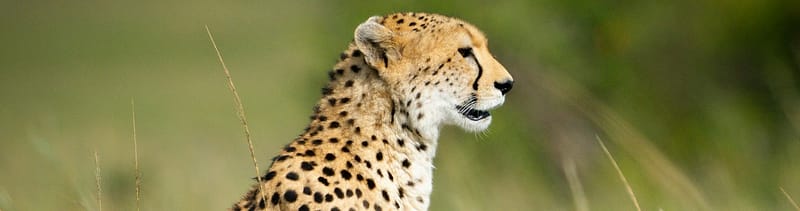
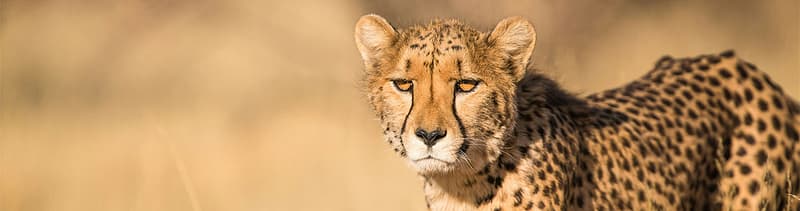
In nature, few creatures embody this lesson more clearly than the cheetah.
Fast: why speed alone fails change efforts
The cheetah is the fastest land animal on Earth. But speed alone is not what makes it successful. In fact, cheetahs only sprint when conditions are right. They conserve energy. They choose their moment. And when they move, they do so with extraordinary purpose.
That distinction matters.
A cheetah can accelerate from zero to highway speed in just a few seconds, but it can only maintain that pace briefly. Prolonged sprinting overheats its body and puts it at risk, so it doesn’t run constantly. It relies on strategic bursts followed by recovery.
Many organizations are doing the opposite.
Constant motion has become a proxy for progress. Leaders stack initiatives, compress timelines, and push for speed. They assume momentum will follow. But without readiness, clarity, and recovery, movement becomes strain.
Trust erodes. Focus fractures. Execution slows, even as activity increases.
In healthcare, this often surfaces as change fatigue. Leaders are asked to carry transformation without the tools, confidence, or alignment needed to do so consistently.
This is the cost of moving fast without activation.
Fit: readiness is the real source of organizational speed
Cheetahs are also built—not just fast, but fit. Their flexible spines act like springs, extending stride length. Their oversized hearts and lungs fuel short bursts of extreme exertion. Even their claws are semi-retractable, functioning like cleats for traction and control.
Speed, for the cheetah, is supported by design.
Organizational speed is no different. It depends on readiness:
- Clear priorities
- Aligned roles and decision rights
- Trust in leadership
- Space to recover between bursts of effort
Without these, even the most capable teams stall.
In complex healthcare environments, readiness also means leaders are equipped to:
- Communicate change clearly and consistently
- Anticipate resistance without overreacting to it
- Translate strategy into practical action across clinical and administrative functions
This is where many well-intentioned change efforts break down.
Flexible: flexibility as a leadership advantage in change management
Another lesser-known fact: cheetahs are successful in only about half of their hunts.
When the chase isn’t working, they abandon it early—not out of weakness, but wisdom. Wasting energy on a failed pursuit can be more dangerous than missing the meal.
That’s a powerful leadership lesson.
Flexibility is what allows cheetahs to survive. Their long tails act as rudders, enabling them to change direction mid-air while running at full speed. Their shoulder blades are unattached to the collarbone, increasing range of motion and agility.
They don’t just follow a path. They adjust to the path while moving.
In today’s environment, where plans age quickly and AI accelerates execution, leaders must do the same. Strategy can no longer be a rigid script. It must serve as intent and direction, leaving room for judgment, adaptation, and human discernment.
Strategic Burst Leadership: a model for healthcare change
This is why I describe effective change leadership today as Strategic Burst Leadership.
It is the ability to:
- Accelerate with clarity
- Recover with purpose
- Adapt in motion
- Sustain energy over time
In healthcare, this approach helps leaders protect human capacity while still advancing meaningful change. It recognizes that adoption, confidence, and execution — not just speed — determine whether transformation takes hold.
The cheetah doesn’t sprint endlessly.
It waits. It watches. It moves when it matters.
Leading change with intention
In 2026, the leaders who succeed won’t be the ones who move the fastest. It’ll be the leaders who move with intention: fast when it matters, fit for the demands of change, and flexible enough to adapt as conditions shift.
Just like our cheetah friend.
Reflection: Where is movement creating activity, but not progress? Where might healthcare change efforts be advancing strategy on paper, but stalling in adoption, confidence, or execution?